
This month marked two years since I started Makan and introduced myself as a publisher to the world.
When I announced the press on August 1, 2024, our first publication, Photography from Yemen, had already been printed. I have a habit of working quietly. Maybe part of it comes from a fear of speaking about a project too soon, hyping myself up, and setting expectations too high. I prefer to work quietly until a book arrives. Even then, I waited roughly a month after Photography from Yemen arrived before announcing the launch.
At the time, I thought completing the book and launching it had been the hardest part.
I was wrong.
Over the past two years, I’ve come to understand that publishing doesn’t end when a book goes to print. In many ways, that’s when the real work begins.
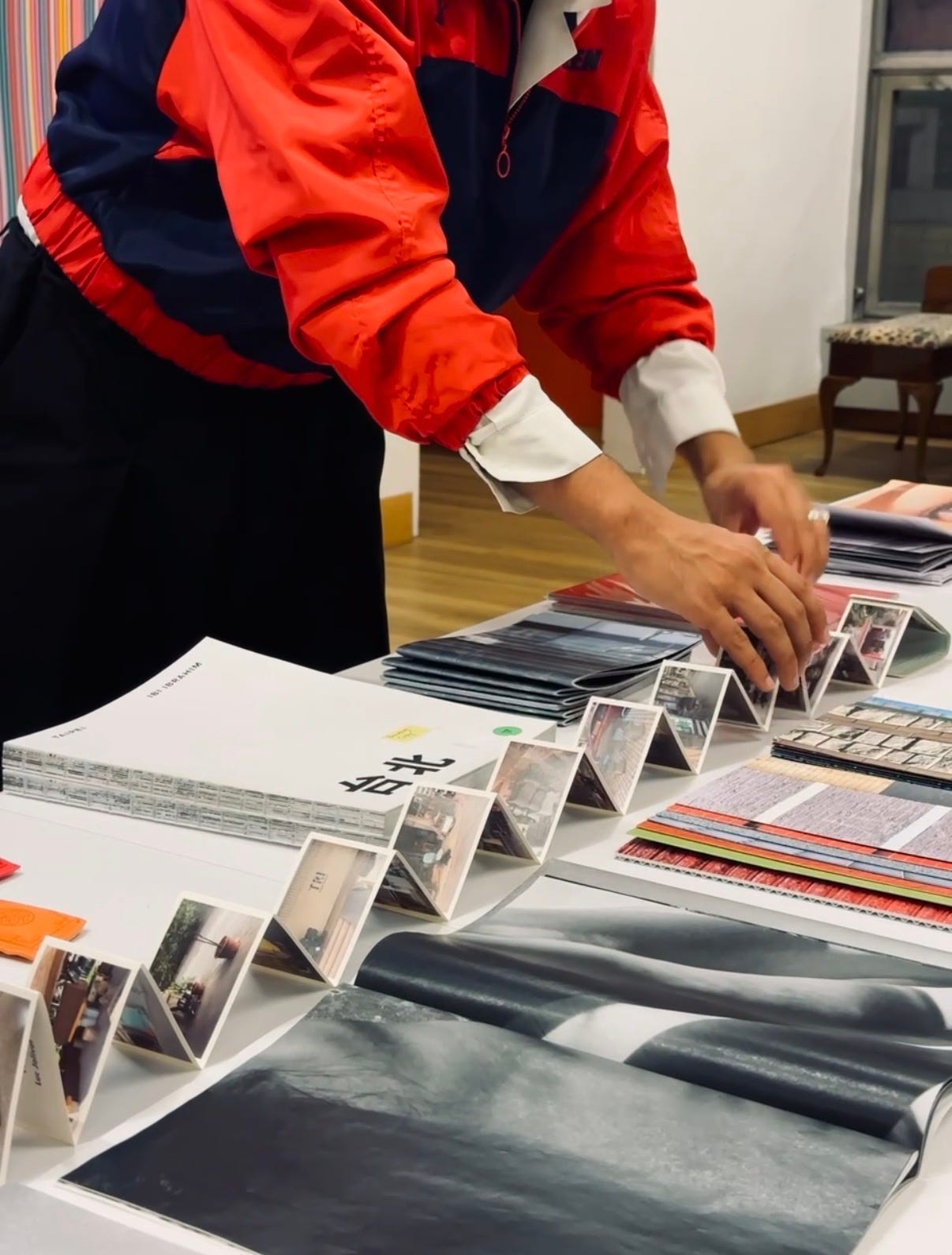
At fairs and bookshops, readers encounter the finished object. Hands on the cover, feeling the texture, examining the binding, taking in the photographs and type. They hold a book. A complete object.
What they rarely see is everything required to keep that book moving through the world.
Publishing means the process of making content, literature, information, or art available to the general public. Of course, this is all true, but I often find myself thinking about the other parts of publishing. The parts that begin when a book leaves the printer.
Makan’s books had to find bookstores.
Our orders had to be packed and shipped.
The invoices we sent out had to be prepared.
The review copies we sent to shops and museums, whether in Los Angeles or Amsterdam, had to be mailed.
The printers’ questions had to be answered.
The shipments delayed at customs had to be tracked.
The libraries we wanted our books to reach had to be convinced that they belonged in their collections.
And those endless applications for art book fairs had to be submitted months in advance.
None of these tasks were particularly visible.
Most weren’t especially glamorous or uplifting.
Yet together, they were publishing.
Two years in, I’ve come to realize that much of my time isn’t spent making the books. It is spent making sure those books continue to exist in the world after they’ve been made.
The press releases that need writing.
The website that needs updating.
The books that need photographing.
There are also the hours spent comparing shipping rates.
Responding to inquiries.
Updating inventory.
And hours and hours of packing and unpacking my suitcases for the next art book fair.
The administrative and physical labor of publishing is something I now approach with appreciation. I no longer separate this invisible, quiet labor from the work itself—it is publishing. Without it, our books don’t reach readers. It’s as simple as that.
Sometime last week, I was searching my inbox for an email from Park Life, a bookstore in San Francisco that had placed an order with Makan after encountering us at the San Francisco Art Book Fair. While looking for it, I stumbled across an email I had sent them in August 2024, when Makan was just beginning. I had written to introduce the press and Photography from Yemen, hoping they might be interested in carrying the book.
I had completely forgotten about that email.
What struck me was how much had changed in two years. Back then, I was reaching out to introduce Makan and hoping our books might find their way onto their shelves. This time, they had come to us, already knowing who we were and wanting to carry the work.
It was a small moment, but one that made me realize what the quiet, invisible labor of publishing had brought back to me. It felt full circle.
So much of independent publishing is this kind of relationship building: introducing the work, following up, staying in touch, showing up at fairs, and trusting that something may come from it eventually. Sometimes nothing does. Other times, two years later, a bookstore you once hoped would notice your books finds its way back to them.
I’ve learned that publishing isn’t defined by the day a book is released.
It’s defined by everything that happens afterward.
That’s the hidden labor.
And after two years, I’ve come to believe it’s also the most meaningful part of the work.
Congratulations on two incredible years!
a life lesson i learned from publishing is to accept that no one is ever going to know how hard you work. navigate accordingly.