
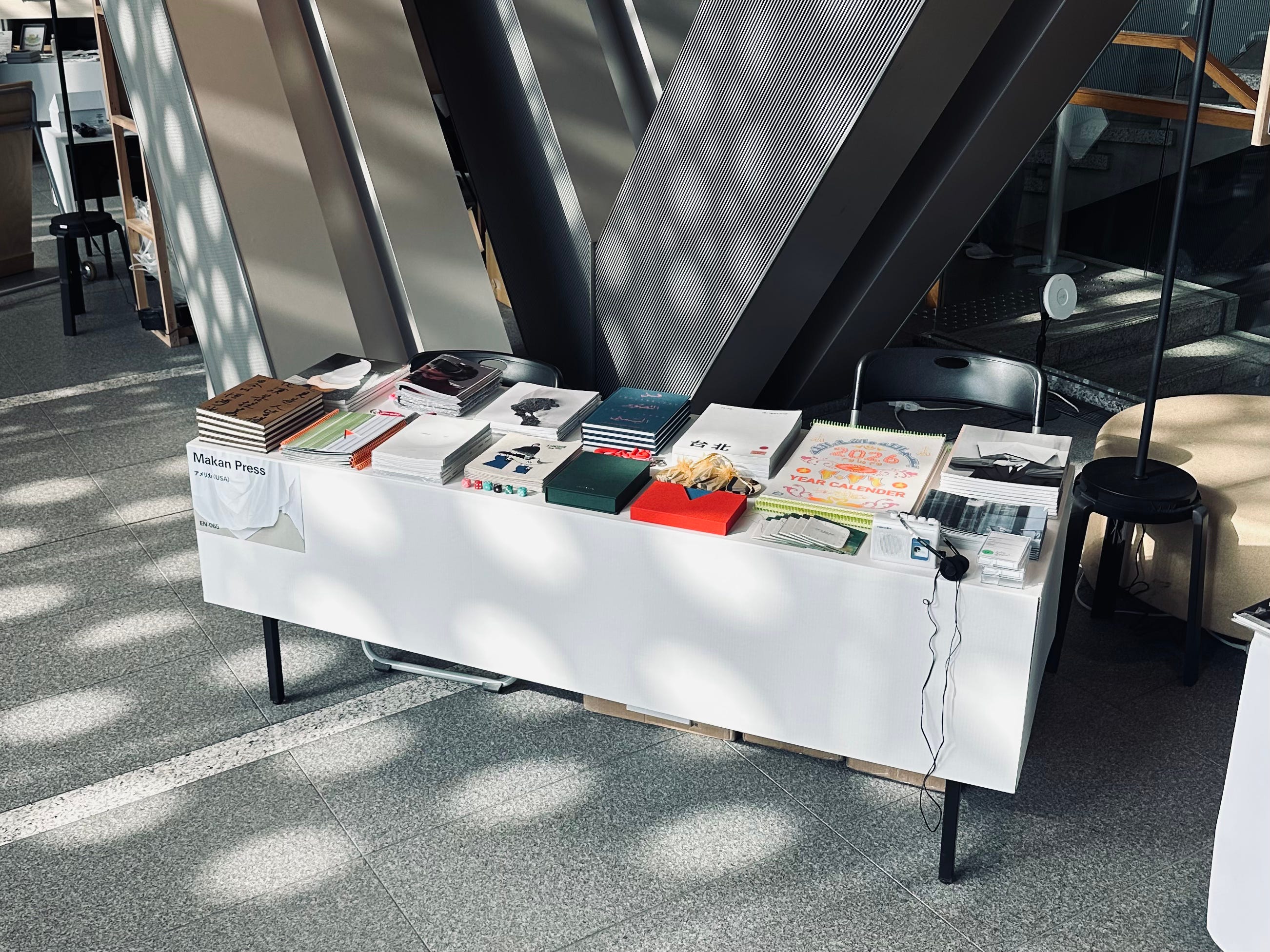
Every time I return from an art book fair, someone asks the same question:
“How did it go?”
It’s a reasonable question.
It’s also one of the most difficult questions I get asked as a publisher.
Do they mean sales?
Do they mean visibility?
Do they mean whether I would do the fair again next year?
The answer is rarely straightforward.
In the beginning, I thought the math was simple. Sell books. Cover expenses. Move on to the next fair.
The more fairs I attended, however, the more complicated that answer became.
Unlike the world of art fairs with their VIP previews and champagne receptions, art book fairs feel much more grounded. Most of the people behind the tables are artists themselves. They’re carrying boxes, arranging displays, answering questions, and hoping someone stops long enough to spend time with the work.
I know this feeling well. When we launched Damascus by Farah Alimi in April 2026, I spent the night before the fair printing and trimming every postcard in the velvet box edition. The project was only ready the morning of the fair. Did I sleep the night before? Not at all. In fact, before most fairs, sleep is a luxury. Last-minute packing, labeling, printing, and problem-solving are often part of the process.
And yet, somehow, when the doors open, all of that work disappears into the background.
The aisles fill with visitors. Young artists carry their book dummies from table to table. Design students carefully study bindings and layouts, taking photos of every detail they can. Curators, librarians, collectors, and booksellers browse the aisles looking for new discoveries. Conversations begin between strangers over a shared interest in a publication, a photograph, or a place.
More than anything, art book fairs are celebrations of publishing – and for a few days, books become the center of attention. This is one of the reasons I love them.
It is also one of the reasons they can be so difficult to evaluate.
Because once the fair is over, the question remains:
How did it go?
But long before a fair opens its doors, the costs have already begun to accumulate.
There are application fees, table fees, printing, shipping costs, promotional materials, and inventory planning. If the fair requires travel, there are flights, hotels, local transportation, food, and often excess baggage charges for books. Sometimes the shipping costs alone exceed the price of the table.
By the time a publisher arrives, they may have already spent hundreds—or more often thousands—of dollars before selling a single book.
The economics are real.
Independent publishing is expensive work, and most publishers operate with limited resources.
Naturally, sales matter.
But after nearly two years of participating in fairs across New York, Los Angeles, London, Sharjah, Riyadh, Toronto, Berlin, Paris, and Tokyo, I have come to realize that sales tell only part of the story.
A fair where you sell 60 books may feel successful.
Just this past May, at the Printed Matter’s LA Art Book Fair, our table was busy from the moment the doors opened. Visitors stopped, browsed, asked questions, and left with books tucked under their arms. It was the kind of weekend every publisher hopes for.
A few days later, I found myself in London participating in Photo London for the first time. The audience was different. The pace was different. Sales were quieter. If I judged the fair solely by revenue, I might have left feeling disappointed. Instead, one of the most meaningful moments of the weekend happened on a Friday morning when a librarian from the Victoria and Albert Museum stopped by our table and acquired several publications.
Some were books we had published ourselves. Others were books by artists and small publishers whose work we had brought with us. When the museum acquired those books, I wasn’t only excited for MAKAN, I was excited for the artists and publishers whose work might not otherwise have found its way into that prestigious collection.
One of the most rewarding parts of participating in fairs is being able to introduce readers and librarians from institutions to work they may never have encountered otherwise.
Moments like these forced me to rethink how I measured success. Because what exactly makes a fair successful?
Is it the number of books sold?
The amount of revenue generated?
The number of people who stop by the table?
The museum acquisition that happens?
The bookstore order that arrives after the fair ends?
The answer depends on who you ask.
This is why I find it difficult to answer a simple question people often ask after a fair:
“How did it go?”
The answer depends on what you’re measuring.
One fair may generate strong sales but few lasting opportunities. Another may lose money while opening doors that shape the next several years of a publisher’s work.
Of course, relationships do not pay invoices. Museum acquisitions do not always cover airfare. Independent publishers still need to sell books.
But after two years of carrying boxes through airports and setting up tables around the world, I have come to think differently about success.
Yes, sales matter.
But so do acquisitions, conversations, introductions, and the opportunities that emerge months—or sometimes years—later.
Some of the most valuable outcomes of a fair cannot be measured on a sales sheet.
Perhaps that is the real art book fair equation.
E poi, da piccola realtà legata all’editoria fotografica, fondamentalmente è l’amore che ci porta a fare tutto ciò Perche se no perché tirare la sera tardi a prepararti, a spaccarti la schiena a trasportare libri per le scale, ad aspettare quelle porte che si aprono durante una inaugurazione?
I’ve just started participating in fairs (I only did two this year) and I totally agree with what you wrote! For me, networking was a big part of the “success” of these two weekends. I’d add to your list the opportunity of creating content around the fair (photos, stories, etc), which give the opportunity to keep talking about the books on social but from a different angle.